We're entering the human era

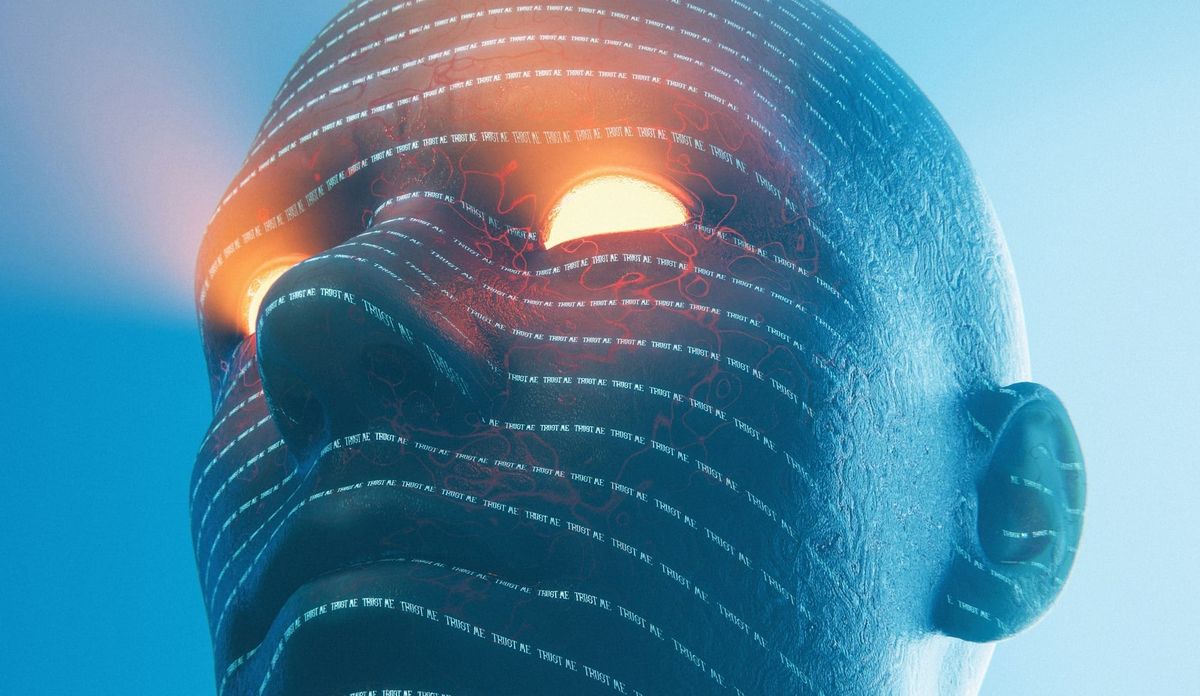
While the investors, VCs, governments, and every influencer who can read news are all heralding the oncoming age of AI, I believe that the opposite is happening. We're entering the human era.
The complexity of human mind has always been underestimated. We have epitomized certain intellectual heroes like Albert Einstein, Leonardo Da Vinci, and Douglas Adams, and regarded the rest of the humanity as simply mediocre. We invented the IQ test to find the rare gift of intelligence in a single dimension among us apes. But, the advent of AI shows us that even the most average human can be more valuable than the best AI agent today.
We have been observing the unstoppable rise of AI, or LLMs to be more precise; AI sounds cooler though. AI models are certainly capable of convincing that they are intelligent. But, they are still statistical word generators, albeit very good ones. I'm obviously simplifying this. Because, I'm sure among the weights in a neural network, some rules for reasoning are also there. Because when we put our thoughts in words, some of the abstract thoughts remain in the relationship between those words in a semantic space. So "just words" may be a simplification. But it's mostly words.
We welcomed AI with since we saw Will Smith eating spaghetti from a bowl. We welcomed it with open arms because we thought it would solve our problems, show us a better way. That's what AI companies have been trying to sell, but does it hold water?
We welcomed AI because we wanted it to be real. We wanted to advance to the next level of civilization. We wanted to be able to talk to human-like superior mechanical creatures, and debate their rights. We wanted them to make our lives easier.
Our desire to become an advanced galactic civilization caused an immense increase in production of LLM generated works. We wrote blog posts, books, we created illustrations, logos, even entire books, we created music. But despite all that we created, there was a problem. None of those works felt authentic or desirable to be consumed by humans. The word generator didn't care if people liked it. It just generated what you told it to generate. So, people suddenly became aware of the major deficiency of AI: it didn't care. Caring was still on humans.
There's been a growing backlash against LLM generated works. We started disliking em-dashes, emojis, whatever AI used excessively. We got tired of boring wall of texts. We got tired of its now instantly recognizable dramatic tone. People got tired of seeing the same RGB aesthetic with saturated colors on generated illustrations. People got tired of musical compositions that held no rhyme or no proper rhythm. On everything that AI has generated, it has left its impression; in other words, it has left the lack of an impression of a human.
All of these complaints stem from the same problem: a missing human. How can this be? Wasn't it a human who wrote the prompt? There was a human after all. But, human wasn't really there, was it? The human only said a few words to the AI. The human failed to express their inner creativity through actual creation. They didn't write the words as their brain imagined them. They only wrote the prompt. They didn't apply each brush stroke, they probably didn't even pick the colors. They had no idea which chord progression would work better for the mood of the music they created.
Yes, AI made people creators who otherwise couldn't, and I'm very much thankful for that. Many of us had forgotten the joy of creating something ourselves because we were involved in consuming what others created so much. AI made creating accessible. It has closed a long existing gap in that sense, fantastic. But, people who use AI to make stuff still have a distance between what they imagine and the actual outcome. In other words, what we create isn't ours. Not unless we get involved in creation to touch and shape every part of it.
The relation between craft and imagination is instrumental to truly create something ourselves.
Back in the 90's, my brother Kemal, a neurosurgeon, had created his own patient tracking software despite knowing nothing about programming. His secret was an app called Clarion Personal Developer. It provided a user interface to design databases, define relationships between them, let you design the menus of your app and the printer outputs, and it would generate a ready-to-run executable. It was a perfectly fine piece of software, and served my brother well. Almost like magic. But, it was confined in the customizability Clarion allowed. Yes, my brother had created an app, but it wasn't an app he would make, it was an app that Clarion defined what would be a good app within certain user-defined parameters. My brother had just ordered an app, not created one.
AI isn't much different. Despite having been trained with vast amount of knowledge humankind has generated, the confines of AI are defined by the average of its training material. When you tell it to generate a web site, it would generate pretty much the same looking buttons, same layout, and it would always pick an ugly purple as a color. When you colorize a black & white picture with AI, it would pick an ugly purple color for cars and clothing most of the time. It just converges to the average of its training material.
One of the reasons is that AI isn't self-aware or world-aware. Every AI session you run, runs in an isolated instance that never goes back to train that AI model, let alone all other instances of itself in the world. The so-called "memory" AI has is just a text file that's fed into its prompt every time you tell it something. It can't learn, it can't adapt. It doesn't have a personality, it doesn't have a social status, so it doesn't care to be different, or to stand out. It lacks empathy and understanding, so it can't get to know you, to understand you, to understand what you mean when you say something. It can assume based on its training data, but as a human being, you're not in that training data. It would in fact generate the same answer over and over if AI companies hadn't introduced a random number generator to make the neural network produce a different output on every input. We are being presented an illusion of vast imagination of a human mind.
In the five stages of grief, we're entering the anger era for AI. People hate AI for many reasons. Some hate it because their intellectual property is used to train AI to generate illustrations that look exactly like in their style. Some hate it because some AI companies apparently destroy the books, even the old and rare ones, after they digitized them for AI training. Some hate AI because Internet is full of AI slop now, making finding authentic human-generated works impossible. Some hate it because several CEOs were duped into the lie that AI would take care of all the work the engineers were doing and laid off thousands of bright, talented people although everyone knows the actual reason was just to preemptively adapt to the slo-mo economic recession we've been going through, but that shall not be named.
This isn't all bad though. Because, through all this pain and suffering, we're re-discovering the value of a human. A human isn't just a biological neural network. A human grows in a world with full range of emotions, becomes part of a society, spends decades with their family before finally becoming someone who can actively participate in the society. A human falls in love, gets upset, experiences joy and sometimes loss, suffers consequences, and enjoys helping others. Our current primitive machinery that mimics humans is nowhere close to what a human can give.
It might sound cliché, but our human essence is what makes us connect our craft with our imagination. It's the difference between a clay pot you make yourself as a gift, and a clay pot you buy from a store. The difference is simply how much you want to express with your work, how much you want it to be yours, how much you want it to reflect your feelings.
Every brush stroke tells the painter's story, not just the painting itself. When we invest in expressing ourselves, we have to be the one holding the brush, otherwise the creation becomes a reflection of something else, most of the time, the average of the entire training corpus of that specific model.
Yes, we can direct the AI to realize what's on our mind, but it can be extremely tiring, and eventually irresistible to give in to the neverending recommendations from a bottomless pool of weighted-random words. Think of it like buying a cake from a pastry shop for a birthday. You might want a specific way to write your message on the cake, you might tell the person who'd write it for you about it. And that baker can toss that cake, and come with a newly baked cake with the message written differently. This could take only a second, but you'd still be wasting cakes after cakes. You'd be wasting a lot of time until the baker gets it exactly right. At one point, you'd finally be okay with something that's close to what you asked but not entirely yours. It would still reflect the average of training corpus based on what you told to the baker. It wouldn't be yours.
Even highly technical work like software development isn't any different. Our emotions still guide us: our love for a finely engineered system, our passion for elegant code, our desire for a great user experience make us strive to write better code. AI, on the other hand, is an extremely efficient tech debt generator. It doesn't care if the generated lines of code are slightly inefficient or bloated. It doesn't have time to check for that. Tokens are expensive. It generates something that works. That's sometimes good, most of the time okay, occasionally wrong. But apart from correctness, every slight inefficiency gets swept under the rug. You don't have time. The management wants you to be 10x more productive, because now there's AI. So, they expect you to move faster, and break more things.
If you let AI take the wheel and drive long enough, don't expect to take the wheel back. Because after some point, it's not your code anymore. It's now something like that guy on the third floor wrote. Nobody else knows how it works, nor does AI. What it can do is, it can still kick off its digital neurons to go over its training material and come up with a local solution to a newly appeared bug. It can't reason about the whole product anymore. Not since the code size exceeded your context window. Yes, you might have a trove of huge Markdown files supposedly summarizing your project layout and whatever, but how do you know if it correctly reflects the current state of the product? You're in deep now.
This is when the bargaining phase comes in. The companies will eventually realize that it was humans all along who could only manage these extremely complicated creations. Letting AI handle the complexity doesn't work in favor of the product because AI just doesn't care. You need people who care, and who are passionate to make great stuff. AI can help you when it completes your sentences, AI can help you when you are doing a refactor, AI can help you write some boilerplate. But, we can't let AI wander around without a human's supervision.
AI can be perfect as a task-oriented tool, as a productivity enhancer. AI can't replace humans in many areas, not yet. More importantly, realizing this through trial and error will make us realize the value of a human. We're finally figuring out what makes us human, what makes us stand out from a bunch of neurons, what is indispensable about us, and what it feels like to create something. When we fully realize this, we'll be okay with an actually advanced AI, not this primitive LLM on that datacenter that drinks Lake Michigan at breakfast, to replace us in areas that don't need humans. Because, we'll be more interested in living our human lives then. As Arthur C. Clarke once said, "the goal of the future is full unemployment, so we can play".